 prabs.xyz
Sleep : A Quiet Superpower We Ignore
January 15, 2026
An inspired story from my internal TED Talk
Most of us treat sleep as optional.
We often steal hours from the night to finish work, scroll on our phones, or watch one more episode. Over time, sleep started to feel optional. Being busy felt productive, and being tired slowly became normal.
But science tells a very different story.
This is not a post about sleeping more for comfort. This is about understanding sleep as a biological system that quietly governs our brain, mental health, body, creativity, and long-term survival.
The Global Sleep Crisis We Rarely Talk About
We are living through a global sleep crisis.
-
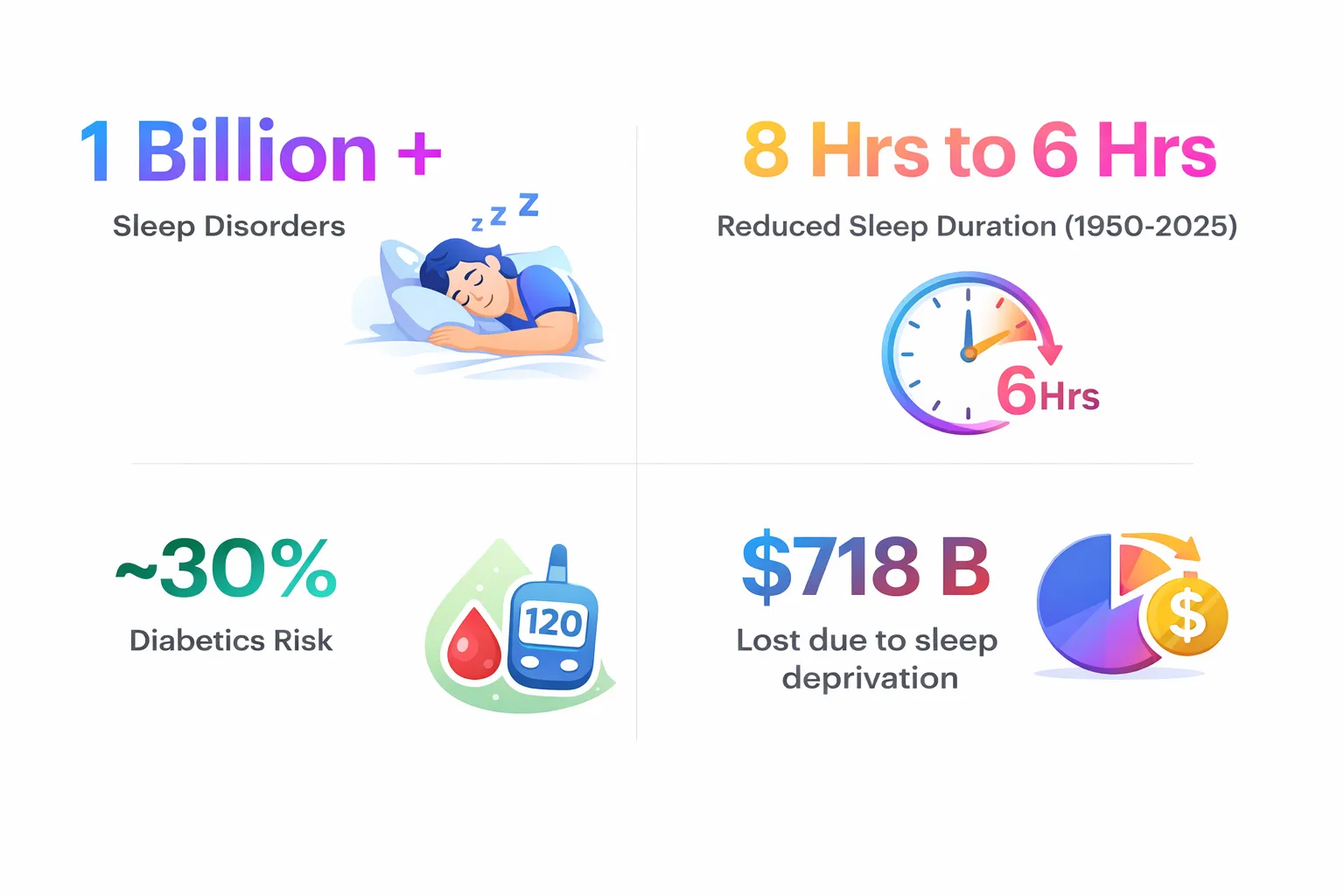
Over 1 billion people worldwide suffer from sleep disorders.
-
Average sleep duration has dropped from 8 hours in the 1950s to about 6 hours today.
-
Sleep deprivation costs economies an estimated $718 billion annually across five OECD countries.
Sleep loss is no longer an individual lifestyle issue. It is a public health and economic problem.
What Sleep Actually Does
Sleep is not passive rest. It is an active, highly coordinated biological process. The good sleep is usually associated with your brain, body and mental health.
The Brain
During sleep, your brain performs critical maintenance tasks:
-
Glymphatic system activation: During sleep, the brain activates the glymphatic system, its built-in cleaning mechanism. This system flushes out metabolic waste and harmful neurotoxins that accumulate during the day. Good sleep keeps the brain clean, efficient, and protected over the long term.
-
Memory consolidation: During sleep, the brain strengthens and organizes memories formed during the day. Important information is stored long-term, while unnecessary details are discarded. This process improves learning, recall, and overall cognitive performance.
-
Synaptic normalization: While sleeping, the brain fine-tunes neural connections formed while we are awake. Weaker or unnecessary connections are reduced, while important ones are strengthened. This keeps the brain efficient, balanced, and ready to learn the next day.
Think of sleep as nightly maintenance for your brain’s operating system.
Mental Health
Consistent sleep is one of the strongest regulators of emotional stability:
-
Reduces stress buildup
-
Lowers depression risk
-
Controls anxiety
Chronic sleep deprivation, on the other hand, amplifies emotional reactivity and weakens resilience.
The Body
Sleep is when the body repairs and rebalances itself:
-
Strengthens immune function
-
Protects heart health
-
Regulates metabolism and insulin sensitivity
-
Repairs muscle tissue
-
Restores physical energy
Sleep is not recovery time after life. It is when recovery happens.
Sleep Stages: Each Stage Has a Purpose
Sleep is not a single, uniform state. It is a carefully structured cycle that the brain and body move through multiple times each night. Every stage plays a specific and essential role.
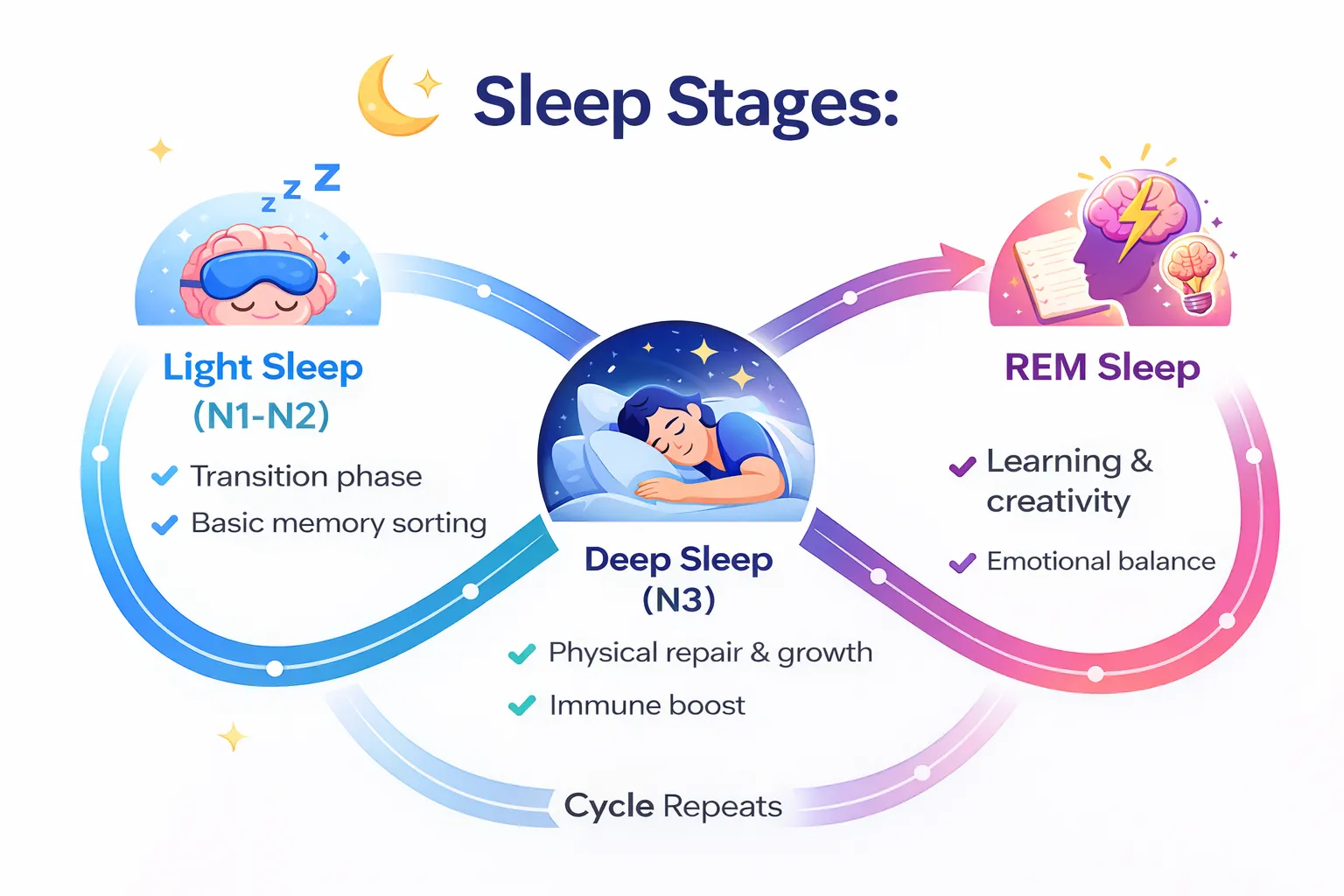
Light Sleep (N1–N2)
This is the transition from wakefulness to deeper sleep.
The brain begins basic information sorting and memory processing, while the body starts to slow down.
Light sleep prepares the brain for the restorative stages that follow.
Deep Sleep (N3)
This is the body’s primary repair phase.
Tissues are repaired, muscles recover, the immune system is strengthened, and insulin sensitivity improves.
Deep sleep is critical for physical health and long-term metabolic balance.
REM Sleep
REM sleep is where the mind does its most advanced work.
Memories are integrated, creativity is enhanced, problems are reframed, and emotions are regulated.
This stage is essential for learning, mental clarity, and emotional stability.
The sleep cycle repeats several times each night. Shortening or skipping any stage disrupts the entire system, affecting both physical recovery and mental performance the next day.
REM Sleep: The Mind’s Reset Button
REM sleep is the stage where the brain does its most important mental recovery work.
While the body stays relaxed, the brain becomes highly active, almost like it is awake.
During REM sleep, the brain:
-
Connects ideas in new ways, boosting creativity and insight
-
Solves problems by reorganizing memories and experiences
-
Processes emotions, helping you feel calmer and more balanced
-
Strengthens learning by integrating memories into long-term storage
When REM sleep is cut short, the mind does not fully reset. You may feel mentally blocked, emotionally sensitive, anxious, or less creative the next day.
In simple terms: Deep sleep repairs the body. REM sleep refreshes the mind.
The Real Health Cost of Poor Sleep
Sleep deprivation carries measurable, long-term consequences:
-
Sleeping less than 5 hours is associated with a 13% higher mortality risk
-
Type 2 diabetes risk increases by 16–41%, depending on sleep duration
-
Chronic sleep loss increases hypertension risk by 45%
-
Short sleep duration in early adulthood is linked to significantly higher BMI by the late twenties
These are not edge cases. These are population-level effects.
How Much Sleep Is Optimal?
Research consistently points to 7–9 hours per night as the optimal range for:
-
Cognitive performance
-
Physical health
-
Longevity
Both extremes carry risk:
-
Too little sleep (less than 5 hours)
-
Too much sleep (more than 9 hours)
Sleep quality and consistency matter as much as duration.
Timing Matters More Than You Think
Sleep is governed by circadian rhythm, not just willpower.
Key signals that align your internal clock:
-
Morning light exposure
-
Afternoon melatonin buildup
-
Consistent bedtime
Research shows that early-to-bed, early-to-rise patterns improve mental health even for night owls. Your biology adapts faster than your habits.
Practical Sleep Strategies That Actually Work
This is not about perfection. It is about consistency.
-
Keep sleep and wake times consistent seven days a week (within 30 minutes)
-
Avoid screens for 60 minutes before bed to protect melatonin release
-
Optimize the sleep environment: dark, quiet, and cool
-
Avoid sleep anxiety: focus on routine, not chasing perfect sleep scores
Better sleep comes from removing friction, not adding pressure.
Technology Is Changing How We Understand Sleep
Modern tools are making sleep visible:
-
Wearables provide real-time tracking of sleep stages and biometrics
-
AI-powered coaching offers personalized insights and early disorder detection
Technology does not replace good habits, but it helps create awareness and accountability.
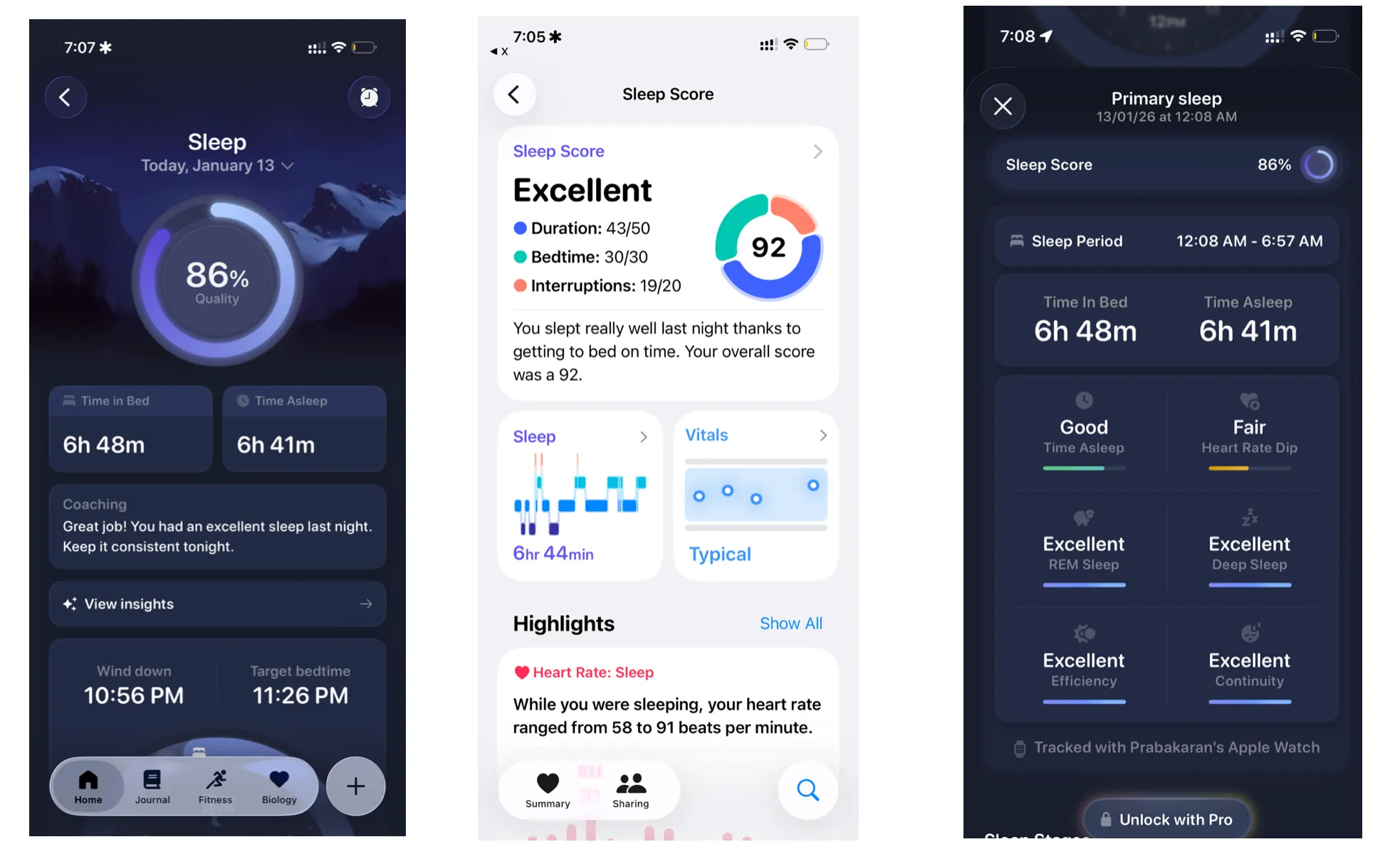
I have been tracking my sleep using Apple Watch, primarily through Apple Health and Bevel. Over time, this has changed how I think about sleep. What gets measured becomes visible, and what becomes visible is harder to ignore.
Apple Health
Apple Health provides a solid foundation for sleep tracking. It captures sleep duration, sleep stages, heart rate, and consistency over time. The strength of Apple Health lies in its simplicity and reliability. It gives a clear, no-nonsense view of how long you sleep, how often you wake up, and how consistent your routine is.
For most people, Apple Health is a great starting point to build basic sleep awareness.
Bevel
Bevel takes sleep tracking a step further. It focuses not just on what happened during sleep, but why it happened.
What I like most about Bevel is how it connects daily habits to sleep quality. It highlights factors like daylight exposure, bedtime consistency, strain, and recovery, and shows how small changes impact deep sleep and overall sleep quality. The insights feel actionable rather than overwhelming.
Bevel made me realize that sleep is not just a night-time activity. It is the result of everything you do throughout the day.
Together, Apple Health provides the data, and Bevel provides the context. That combination turned sleep from a passive metric into an active feedback loop for better health.
Finally Sleep Is Not Laziness
It is an investment in health, productivity, creativity, and longevity. The choices you make tonight quietly shape who you are tomorrow. Treat sleep not as time lost, but as the foundation everything else depends on.
Thanks to Ju ⚡️ - your spark shaped this talk / blog.